
OpenAI Unveils 'Jalapeno': A Custom Chip Set to Turbocharge ChatGPT and Reshape AI Hardware
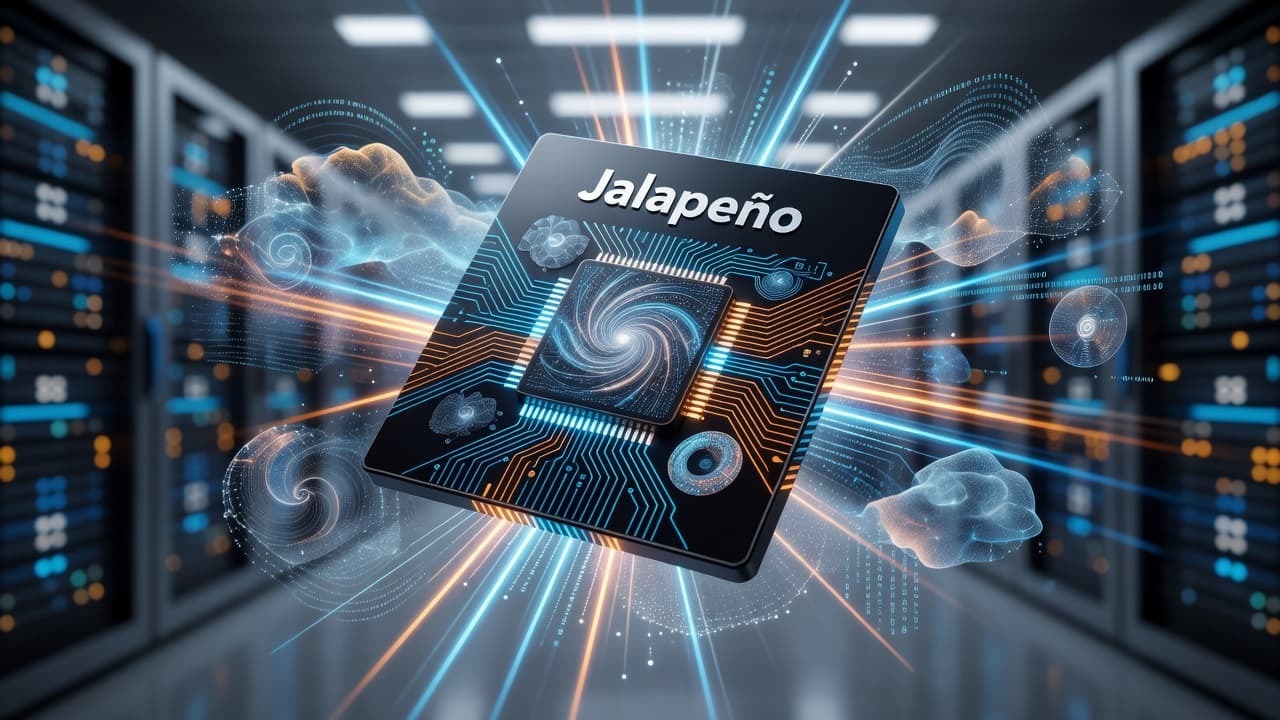
OpenAI introduces 'Jalapeno,' its first custom AI chip designed to accelerate ChatGPT, marking a pivotal shift towards specialized hardware for advanced AI models.

The Dawn of a New Era in AI Hardware
The relentless pursuit of artificial intelligence advancement has hit a familiar bottleneck: computational power. As AI models like ChatGPT grow exponentially in complexity and capability, their demand for processing muscle becomes insatiable. In a strategic move poised to redefine the AI hardware landscape, OpenAI, the creator of ChatGPT, has officially unveiled its first custom-designed chip, codenamed "Jalapeno." This development signals a significant pivot, as the company seeks to gain greater control over its infrastructure, optimize performance, and potentially reduce the exorbitant costs associated with running cutting-edge AI.
Introducing "Jalapeno": OpenAI's Bespoke Silicon Solution
Jalapeno isn't just another chip; it's a testament to OpenAI's commitment to pushing the boundaries of what's possible in AI. Designed specifically to accelerate the operations of large language models (LLMs) like ChatGPT, this custom silicon aims to drastically improve both the training and inference phases. For end-users, this could translate into faster response times, more complex query handling, and an overall smoother, more powerful AI experience. For developers and researchers within OpenAI, it means greater efficiency and fewer limitations in iterating on future models.
Why Custom Silicon? The Drive for Efficiency and Performance
For years, the AI industry has largely relied on general-purpose Graphics Processing Units (GPUs) from companies like Nvidia to power its most demanding workloads. While incredibly powerful, GPUs are not always perfectly optimized for the highly specific computational patterns of LLMs. OpenAI's decision to develop its own chip stems from several critical factors:
- Optimized Performance: Custom chips, often referred to as Application-Specific Integrated Circuits (ASICs), can be tailored precisely to the unique mathematical operations and data flows inherent in AI inference and training. This bespoke design leads to unparalleled speed and efficiency for their intended purpose.
- Cost Reduction: The operational costs of running massive AI models on third-party hardware are astronomical. By designing its own silicon, OpenAI aims to significantly drive down these expenses in the long run, making advanced AI more sustainable and scalable.
- Power Efficiency: Custom chips can achieve the same or greater performance with substantially less power consumption compared to general-purpose hardware. This is crucial for both environmental impact and reducing data center operational costs.
- Strategic Independence: Developing proprietary hardware reduces reliance on external suppliers, granting OpenAI greater control over its supply chain, design iterations, and overall technological roadmap.
Unleashing ChatGPT's Full Potential
The immediate beneficiary of the Jalapeno chip will be ChatGPT. Users can anticipate a noticeable enhancement in its responsiveness and ability to process intricate prompts. This means conversational AI could become even more fluid, capable of handling longer contexts, generating more nuanced responses, and executing multi-step instructions with greater speed and accuracy. Furthermore, faster inference times can lead to more cost-effective deployment, potentially allowing OpenAI to offer more accessible or feature-rich tiers of service.
A Strategic Play in the AI Arms Race
OpenAI's foray into custom silicon is more than just a technical upgrade; it's a strategic declaration. It places the company in an exclusive club alongside tech giants like Google (with its TPUs) and Amazon (with Inferentia/Trainium) who have also invested heavily in proprietary AI hardware. This move underscores the competitive intensity of the AI landscape, where vertical integration – controlling both software and hardware – is increasingly seen as a key differentiator and a path to sustained innovation.
Beyond ChatGPT: Paving the Way for Future AI Models
While Jalapeno's immediate focus is ChatGPT, its implications extend far beyond. This initial investment in custom silicon lays the groundwork for future generations of AI models. OpenAI can now design hardware concurrently with its software, creating a symbiotic relationship that could unlock entirely new capabilities and efficiencies for models yet to be conceived. This holistic approach promises to accelerate the pace of AI research and development, potentially leading to breakthroughs that are currently unimaginable on conventional hardware.
The introduction of Jalapeno marks a transformative moment for OpenAI and the broader AI industry. By taking control of its underlying infrastructure, OpenAI is not only optimizing its current flagship product but also charting a more independent and efficient course for the future of artificial intelligence. This custom chip could very well be the spark that ignites the next wave of AI innovation, promising a future where AI is not only more powerful but also more accessible and sustainable.
How this article was made
- Sources
- Tech Xplore
- Generated on:
- Jun 25, 2026
This content is produced by Acerbo.AI's AI editorial pipeline: source gathering, rewriting and imagery are automated. Editorial oversight stays human.
Related Articles
OpenAI Unveils 'Jalapeño': A Bold Leap into Custom AI Hardware
OpenAI introduces 'Jalapeño,' its first custom AI chip, signaling a strategic move to enhance its AI infrastructure and reduce reliance on external hardware suppliers.

OpenAI Ignites AI Race with 'Jalapeño' Chip: A Game-Changer for ChatGPT and Beyond
OpenAI unveils 'Jalapeño,' its first custom AI chip developed with Broadcom, marking a significant strategic shift towards advanced AI infrastructure and supercharging ChatGPT's capabilities.

OpenAI's Custom AI Chip: A Game-Changer for AI Infrastructure
OpenAI unveils its first custom AI chip, marking a strategic shift to control its infrastructure, optimize performance, and reduce costs. This move intensifies the race for AI hardware dominance.