
Revolutionary AI Cracks Long-Standing Mathematical Enigma, Reshaping Scientific Discovery
A groundbreaking AI system has reportedly conquered one of science's most intractable mathematical problems, signaling a monumental leap for artificial intelligence and its potential to accelerate scientific understanding across disciplines.
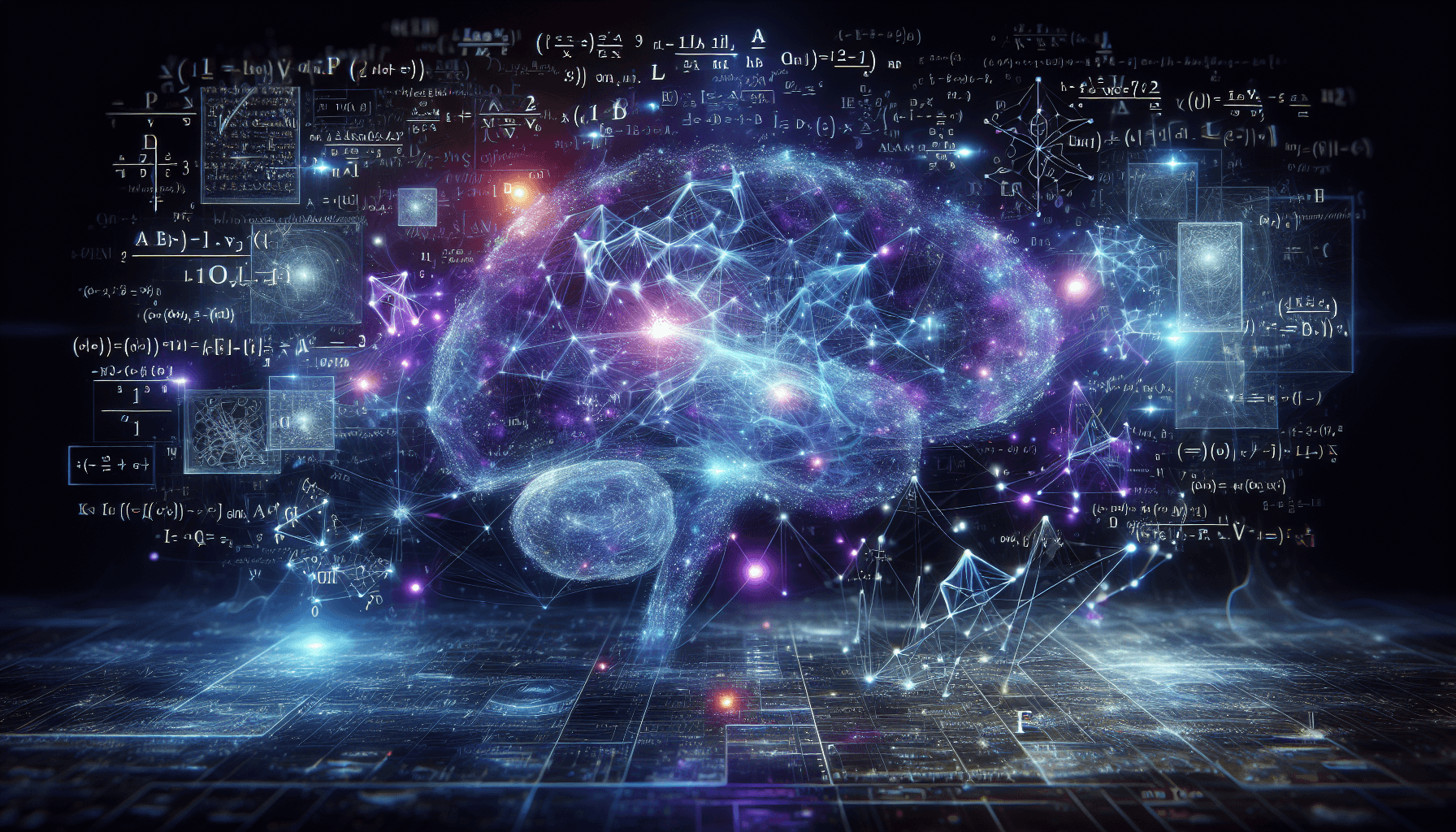
A New Dawn for Mathematical Discovery
Humanity has long grappled with complex mathematical problems, some remaining unsolved for centuries, challenging the brightest minds. Now, a significant announcement reported by Crescendo.ai reveals a revolutionary artificial intelligence system has reportedly conquered one of these long-standing enigmas. This breakthrough doesn't just represent a triumph for AI; it heralds a new era where machines could systematically unravel the deepest complexities of the universe, fundamentally reshaping scientific research and our understanding of intelligence itself.
The Nature of the Challenge
While specifics of the problem remain under wraps, the announcement indicates it was a challenge characterized by its immense computational complexity and non-intuitive structure. Such problems often involve vast combinatorial spaces, where traditional human intuition or brute-force computational methods fall short. They might span areas from pure mathematics, like number theory or topology, to applied fields such as quantum physics or materials science, demanding an ability to identify hidden patterns and generate novel hypotheses that elude conventional approaches.
How AI Cracked the Code: Beyond Brute Force
The success of this AI system lies in its sophisticated application of deep learning and advanced algorithmic design. Unlike previous attempts that relied on pre-programmed rules, this AI likely leveraged massive datasets of mathematical constructs and proofs, learning to recognize intricate relationships and underlying structures. It's believed to have employed neural networks capable of pattern recognition at an unprecedented scale, allowing it to explore problem spaces far beyond human capacity and even propose novel solution pathways previously unconsidered.
Key to its success might include:
- Advanced Pattern Recognition: Identifying subtle, non-obvious correlations within complex mathematical data.
- Hypothesis Generation: Formulating new mathematical conjectures and testing their validity efficiently.
- Automated Proof Verification: Systematically checking the logical consistency and correctness of derived solutions.
- Combinatorial Optimization: Navigating incredibly vast solution spaces to find optimal or previously hidden paths.
Far-Reaching Implications for Science and Beyond
This achievement extends far beyond the realm of abstract mathematics. The methodologies developed could be transferable to a multitude of scientific disciplines. Imagine AI assisting in discovering new drug compounds, designing more efficient algorithms for complex engineering problems, or even accelerating our understanding of fundamental physics. The ability of AI to tackle problems that have stumped human experts for generations suggests a paradigm shift in how scientific research is conducted, potentially democratizing access to complex problem-solving tools.
The Future of Human-AI Collaboration
This breakthrough doesn't diminish human intellect; rather, it amplifies it. It paves the way for a powerful synergy between human intuition and AI's computational prowess. Researchers can now offload computationally intensive or pattern-recognition tasks to AI, freeing up human minds to focus on conceptualization, interpretation, and guiding the AI's exploration. This partnership promises to unlock new frontiers of knowledge, accelerating the pace of discovery across virtually every scientific and technological domain.
Conclusion: Charting New Territories
The reported solution to a major mathematical challenge by an advanced AI system marks a pivotal moment in the history of science. It underscores the transformative potential of artificial intelligence not merely as a tool, but as a genuine partner in intellectual exploration. As AI continues to evolve, we can anticipate a future where the seemingly impossible becomes achievable, pushing the boundaries of human understanding and innovation further than ever before.
How this article was made
- Sources
- Crescendo AI
- Generated on:
- May 5, 2026
This content is produced by Acerbo.AI's AI editorial pipeline: source gathering, rewriting and imagery are automated. Editorial oversight stays human.
Related Articles
AI's Monumental Leap: Cracking One of Science's Most Enduring Mathematical Riddles
A groundbreaking AI system has achieved a monumental feat, reportedly solving a complex mathematical problem that has baffled scientists for decades, heralding a new era of discovery.
AI Unleashes New Era of Discovery: Conquers One of Science's Toughest Math Problems
A groundbreaking AI system has reportedly cracked a long-standing mathematical enigma, a feat previously thought impossible. This breakthrough promises to redefine scientific research and technological advancement.
AI Deciphers Decades-Old Math Enigma, Unlocking New Scientific Frontiers
A groundbreaking AI system has reportedly cracked a complex mathematical problem that has stumped human researchers for decades, promising to revolutionize fields from logistics to drug discovery.