
AI Computing Revolution: Scientists Forge Hybrid Light-Matter Particle for Ultra-Fast Performance
Scientists have engineered a revolutionary hybrid light-matter particle, promising to dramatically accelerate AI computing and unlock unprecedented performance and energy efficiency.
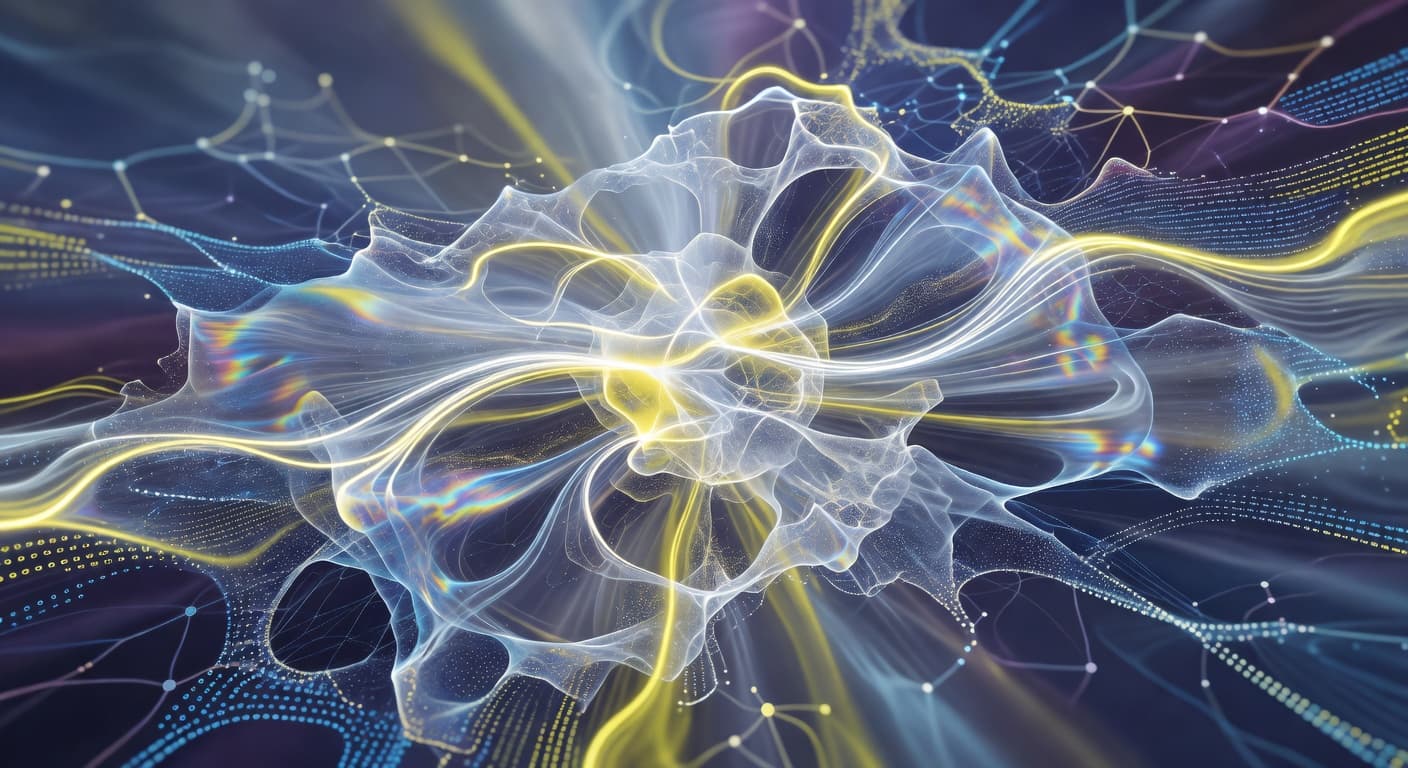
A New Dawn for AI: Unveiling the Hybrid Light-Matter Particle
In a monumental leap forward for artificial intelligence, scientists have successfully engineered a groundbreaking hybrid light-matter particle. This revolutionary creation holds the promise of dramatically accelerating AI computing capabilities, potentially ushering in an era of unprecedented speed and efficiency for machine learning algorithms and complex computational tasks. It's a development that could redefine the very fabric of how we process information.
Bridging Light and Matter: What is This Hybrid?
At its core, this innovative particle is a quasiparticle, a collective excitation within a material that behaves like a particle. Specifically, it's a unique fusion of light (photons) and matter (excitons – excited electrons and holes). By combining the rapid, energy-efficient transmission properties of photons with the strong interaction potential of excitons, researchers have created a novel entity capable of carrying and processing information in ways previously unimaginable.
Think of it as giving light the "brainpower" of matter. While photons travel at light speed, their interaction with each other is weak. Excitons interact strongly but are limited by their slower speed. This hybrid particle, often referred to as a polariton in similar contexts, leverages the best attributes of both worlds, offering a potent new medium for data transfer and computation.
The Urgent Need for Speed in AI
The demands of modern artificial intelligence are astronomical. From training sophisticated neural networks to running complex simulations and real-time data analysis, AI requires immense computational power. Traditional silicon-based microchips, while incredibly advanced, are beginning to encounter fundamental physical limits in terms of speed, heat generation, and energy consumption.
As AI models grow larger and more intricate, the current hardware infrastructure struggles to keep pace. This bottleneck slows down research, limits the complexity of deployable AI systems, and consumes vast amounts of energy. A paradigm shift in computing technology is essential to unlock the next generation of AI breakthroughs.
Unlocking Ultra-Fast Computational Potential
The advent of this hybrid light-matter particle offers a compelling solution to these challenges. By harnessing its unique properties, scientists envision a future where computational processes are no longer constrained by the limitations of electrons moving through wires. Instead, information could be processed and transmitted at speeds approaching that of light, but with enhanced interaction capabilities.
- Enhanced Speed: Information transfer and processing could occur at significantly higher frequencies than conventional electronics.
- Reduced Energy Consumption: Light-based computing inherently generates less heat, leading to more energy-efficient systems.
- Parallel Processing: The nature of light allows for multiple computations to occur simultaneously, boosting parallel processing capabilities crucial for AI.
- Novel Architectures: This breakthrough paves the way for entirely new computer architectures, moving beyond the von Neumann bottleneck.
Beyond Silicon: A Glimpse into Future Computing
This scientific achievement represents more than just an incremental improvement; it signifies a potential revolution in computing. It moves us closer to a future where AI systems are not only faster and more powerful but also more sustainable. Imagine AI models that train in minutes instead of days, or real-time AI applications with unprecedented responsiveness.
The implications extend far beyond just AI. This technology could impact fields ranging from drug discovery and materials science to financial modeling and climate prediction, where massive computational resources are a constant requirement. It's a testament to human ingenuity pushing the boundaries of what's possible in physics and engineering.
The Road Ahead: Challenges and Opportunities
While the potential is immense, significant research and development lie ahead. Key challenges include ensuring the stability and scalability of these hybrid particles at room temperature, integrating them into practical computing architectures, and developing new programming paradigms to fully exploit their unique properties. However, the initial success marks a critical first step on a promising journey.
Pioneering the Next Era of AI Computing
The creation of this hybrid light-matter particle is a landmark achievement, offering a tantalizing glimpse into the future of AI computing. By merging the speed of light with the interactive nature of matter, scientists are forging a path towards ultra-fast, energy-efficient computational systems. This breakthrough promises to accelerate AI development, unlock new capabilities, and ultimately transform our technological landscape, pushing the frontiers of what artificial intelligence can achieve.
How this article was made
- Sources
- ScienceDaily
- Generated on:
- May 19, 2026
This content is produced by Acerbo.AI's AI editorial pipeline: source gathering, rewriting and imagery are automated. Editorial oversight stays human.
Related Articles
Unlocking AI's Future: Penn Researchers Forge Hybrid Light-Matter Particles for Lightning-Fast Computing
University of Pennsylvania scientists have engineered groundbreaking hybrid light-matter particles, promising radical acceleration and energy efficiency for next-gen AI.

AI Just Unlocked New Physics: A Groundbreaking Discovery in Extreme States of Matter
Artificial intelligence has unveiled novel physical laws governing extreme states of matter, revolutionizing our understanding of the universe's fundamental building blocks.
NVIDIA's $4 Billion Bet on Photonics: Illuminating the Future of AI Data Centers
NVIDIA invests $4B in photonics to overcome AI data center scaling challenges, leveraging light for faster, more efficient data transfer and cementing its leadership in AI infrastructure.