
Milky Way's Hidden Secrets: Rubin Observatory Uncovers Two New Companions
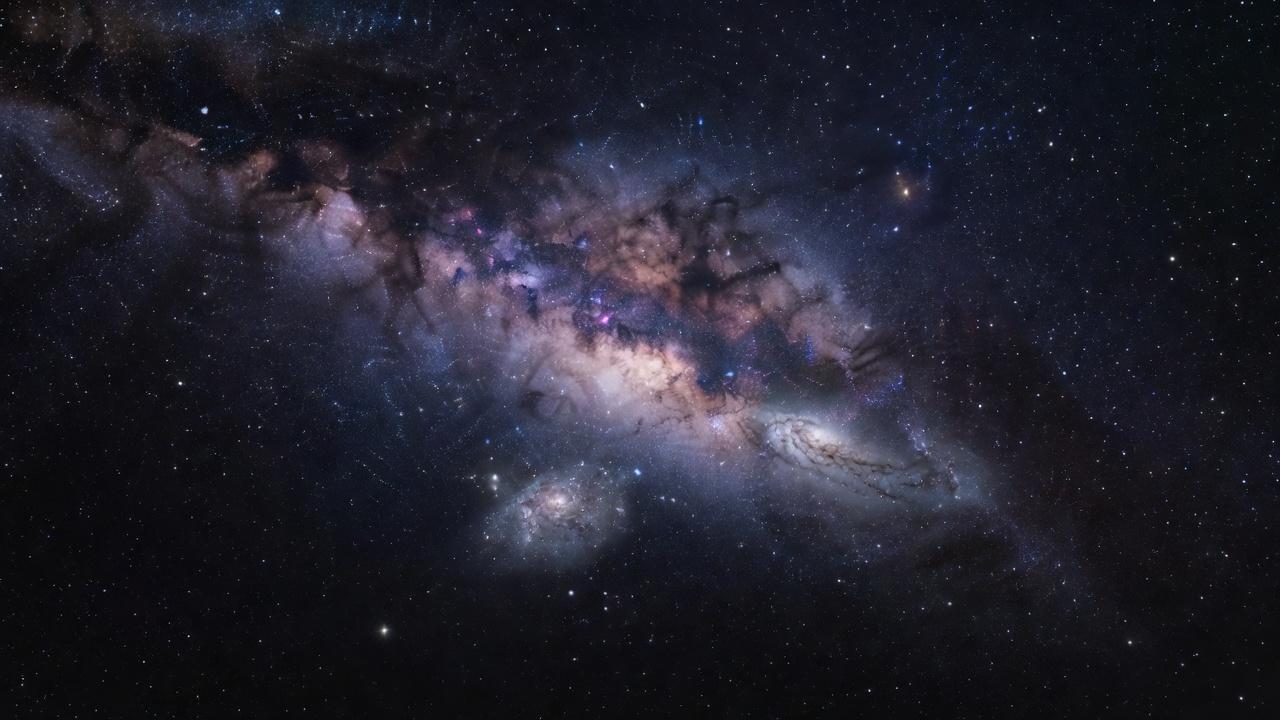
The Rubin Observatory has unveiled two previously hidden satellites orbiting our Milky Way, shedding light on its complex structure.
Unveiling the Mysteries of Our Galaxy
The universe is full of surprises, and the latest discovery by the Rubin Observatory has certainly added to the intrigue surrounding our Milky Way galaxy. Astronomers have recently identified two previously unknown satellite galaxies, expanding our understanding of the Milky Way's intricate structure and its gravitational influence.
Understanding the Significance of These Discoveries
Located on the outskirts of the Milky Way, these two hidden companions, which have been dubbed companion galaxies, are crucial for several reasons. First, they help to provide insight into the formation and evolution of our galaxy. The discovery emphasizes the fact that our cosmic neighborhood is much more complex than previously thought.
These newly identified satellites may also play a significant role in the ongoing research into dark matter. By studying their orbits and interactions, scientists hope to gather more information about this elusive component that constitutes a significant portion of the universe's mass.
How the Rubin Observatory Made This Discovery
The Rubin Observatory, equipped with advanced imaging technology, utilized its vast observational capabilities to scan the skies. By combining data from its Legacy Survey of Space and Time (LSST) with existing astronomical records, researchers were able to pinpoint these two satellite galaxies hidden in the shadows of our galaxy.
This innovative approach not only enhanced the precision of the search but also allowed for a more extensive analysis of the Milky Way's satellite system. The observatory's cutting-edge instruments are designed to capture faint light from distant celestial objects, making it an invaluable resource for astronomers worldwide.
The Future of Galactic Research
As we continue to explore the cosmos, the implications of these findings are monumental. The discovery of these hidden companions opens new avenues for research into the dynamics of our galaxy and its surrounding environment. Future studies will focus on understanding how these satellites formed and what role they play in the broader cosmic landscape.
Moreover, the ongoing research at the Rubin Observatory promises to unveil even more secrets of the universe, potentially leading to groundbreaking revelations about dark matter and the evolution of galaxies. Scientists are eager to leverage this technology to uncover more hidden treasures in our vast universe.
Conclusion
In conclusion, the recent discoveries by the Rubin Observatory highlight the dynamic nature of our Milky Way galaxy. With the identification of two hidden satellite galaxies, astronomers are better equipped to understand the complex interactions that shape our cosmic neighborhood. As research continues, we can expect exciting developments that will deepen our understanding of the universe.
How this article was made
- Sources
- ScienceDaily
- Rewriting model:
- openai/gpt-4o-mini
- Image generated with:
- xAI Grok
- Generated on:
- 1h ago
This content is produced by Acerbo.AI's AI editorial pipeline: source gathering, rewriting and imagery are automated. Editorial oversight stays human.
Related Articles

Exploring Ancient Mars: Insights from One of the Oldest Meteorites
A recent NASA-funded study unveils significant findings from one of the oldest Mars meteorites, shedding light on the planet's early history.
Cosmic Cannibals: Astronomers Uncover Two Actively Feeding Supermassive Black Holes in the Early Universe
A groundbreaking discovery reveals two actively feeding supermassive black holes in the universe's nascent stages, challenging theories of cosmic evolution and galaxy formation.
Cosmic Detective Work: Second-Generation Planet Cracks Hubble's Long-Standing Mystery
Astronomers have unveiled a groundbreaking discovery: a 'second-generation' exoplanet whose unique formation mechanism provides the missing link to solve a perplexing cosmic enigma observed by the Hubble Space Telescope for years.