
Revolutionary AI Blood Test Predicts Heart Disease 15 Years Early
A groundbreaking AI-powered blood test offers unprecedented early detection of heart disease, identifying risks up to 15 years in advance and transforming preventive cardiovascular care.
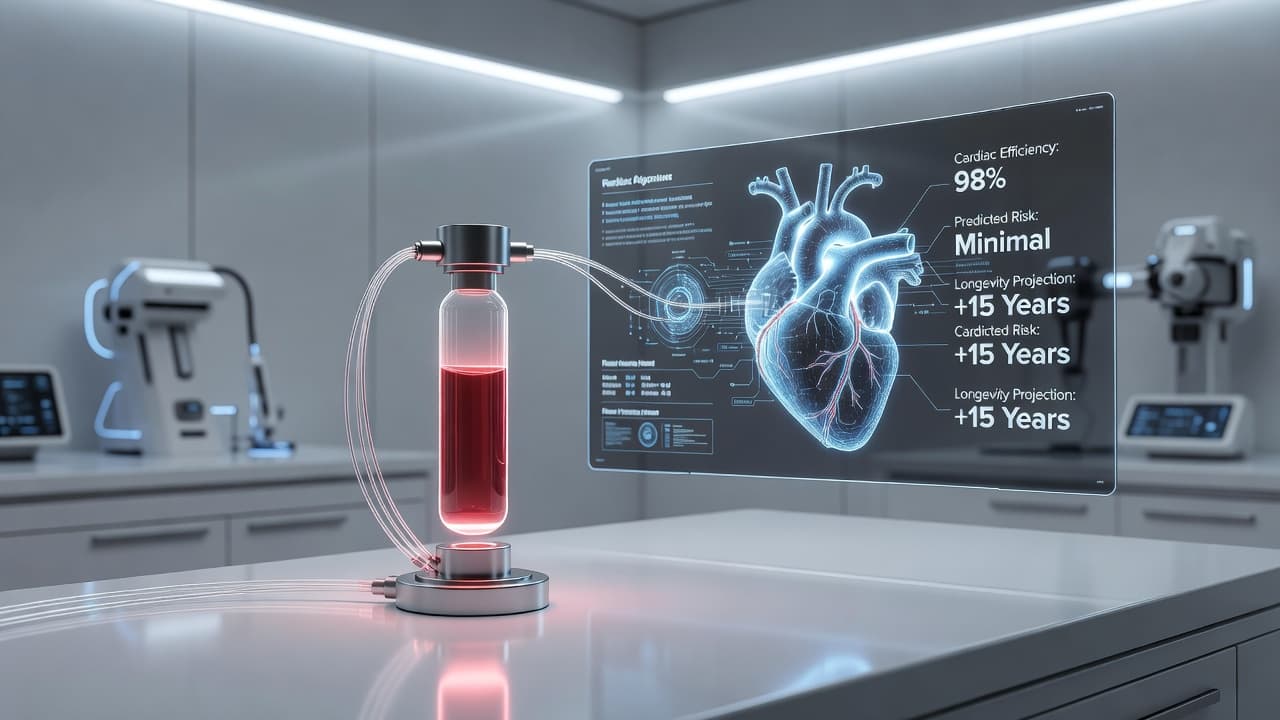
A New Era in Heart Health: AI Predicts Disease 15 Years Early
Imagine a future where the threat of heart disease, the leading cause of death globally, could be identified not just months, but a staggering 15 years in advance. That future is rapidly becoming a reality, thanks to a groundbreaking AI-powered blood test. This revolutionary diagnostic tool promises to redefine preventive medicine, offering an unprecedented window into an individual's cardiovascular health long before symptoms even appear.
The announcement of this innovative technology marks a significant leap forward in our battle against heart conditions, moving from reactive treatment to proactive prevention. For millions worldwide, this could mean the difference between a life-altering diagnosis and the opportunity to make timely, life-saving interventions.
The Dawn of Predictive Cardiology
Historically, detecting heart disease often relied on symptoms, family history, and traditional risk factors like high cholesterol or blood pressure. While effective to a degree, these methods often identify issues when they are already advanced, limiting the scope for early, impactful prevention strategies. This new AI blood test aims to fundamentally change that paradigm.
How Does This AI Breakthrough Work?
At its core, the novel test leverages sophisticated artificial intelligence algorithms to analyze a vast array of biomarkers present in a simple blood sample. Unlike conventional tests that might focus on one or two specific indicators, this AI system can detect subtle patterns and combinations of markers that are indicative of nascent cardiovascular issues, long before they manifest clinically.
The AI is trained on massive datasets, learning to recognize complex signatures associated with future heart disease development. This machine learning capability allows it to identify risk profiles with an accuracy and foresight that human analysis alone simply cannot match, providing a highly personalized risk assessment for each patient.
Unprecedented Early Detection
The most striking aspect of this new development is its ability to predict heart disease up to 15 years in advance. This extended predictive window is truly transformative. It offers individuals and their healthcare providers ample time to implement aggressive preventive measures, ranging from lifestyle modifications and dietary changes to targeted pharmacological interventions.
Such early warning empowers patients to take control of their health destiny. Imagine knowing you are at high risk for heart disease in your 30s or 40s, giving you decades to mitigate that risk and potentially avoid a severe cardiac event later in life. This isn't just about diagnosis; it's about enabling a future of better health.
Transforming Preventive Healthcare
The implications of this AI blood test extend far beyond individual patient care. It has the potential to reshape public health strategies and significantly reduce the global burden of cardiovascular disease. By identifying at-risk populations much earlier, healthcare systems can deploy resources more efficiently and effectively.
Impact on Global Health
- Reduced Mortality Rates: Early detection means earlier intervention, potentially leading to a dramatic decrease in heart attack and stroke fatalities.
- Personalized Medicine: Tailored prevention plans based on an individual's unique risk profile, moving away from one-size-fits-all approaches.
- Cost Savings: Preventing disease is often far less expensive than treating advanced conditions, potentially easing the strain on healthcare budgets worldwide.
- Improved Quality of Life: Patients can enjoy longer, healthier lives free from the debilitating effects of advanced heart disease.
The Road Ahead: Challenges and Opportunities
While the promise of this AI blood test is immense, its journey to widespread clinical adoption will involve rigorous validation studies, regulatory approvals, and ensuring equitable access across diverse populations. Data privacy and ethical considerations surrounding predictive health information will also be crucial discussion points as this technology matures.
However, the potential benefits far outweigh these challenges. This breakthrough underscores the incredible power of artificial intelligence when applied to complex medical problems, paving the way for a future where chronic diseases are not just managed, but truly prevented.
A Glimpse into a Healthier Future
This AI-powered blood test represents more than just a scientific achievement; it's a beacon of hope for a healthier global population. By offering an unprecedented ability to predict heart disease years in advance, it empowers individuals and transforms the landscape of cardiovascular care. As we look towards 2026 and beyond, this innovation promises to be a cornerstone of proactive health management, ushering in an era where early detection truly means lasting prevention.
How this article was made
- Sources
- ScienceDaily
- Generated on:
- Jul 20, 2026
This content is produced by Acerbo.AI's AI editorial pipeline: source gathering, rewriting and imagery are automated. Editorial oversight stays human.
Related Articles
Cosmic Cannibals: Astronomers Uncover Two Actively Feeding Supermassive Black Holes in the Early Universe
A groundbreaking discovery reveals two actively feeding supermassive black holes in the universe's nascent stages, challenging theories of cosmic evolution and galaxy formation.
Cosmic Detective Work: Second-Generation Planet Cracks Hubble's Long-Standing Mystery
Astronomers have unveiled a groundbreaking discovery: a 'second-generation' exoplanet whose unique formation mechanism provides the missing link to solve a perplexing cosmic enigma observed by the Hubble Space Telescope for years.
Cosmic Revelation: Have Scientists Finally Glanced at Dark Matter?
A recent scientific development suggests researchers may have detected dark matter, the universe's most enigmatic substance. This potential breakthrough could redefine cosmology and particle physics.